Waikiki is where a lot of people swim in the Pacific for the very first time, and the water in front of the beach is about as forgiving as Hawaii gets. Reefs offshore knock the swell down before it reaches you, lifeguards watch the main stretch, and the bottom shelves gently. That reputation is earned. It also makes people careless, and careless is how a good trip goes sideways. Waikiki Beachside Hostel sits one block from the sand at 2556 Lemon Road, so guests here are in the water more than most visitors. Here is what to know before you walk over.
Is It Safe to Swim at Waikiki Beach?
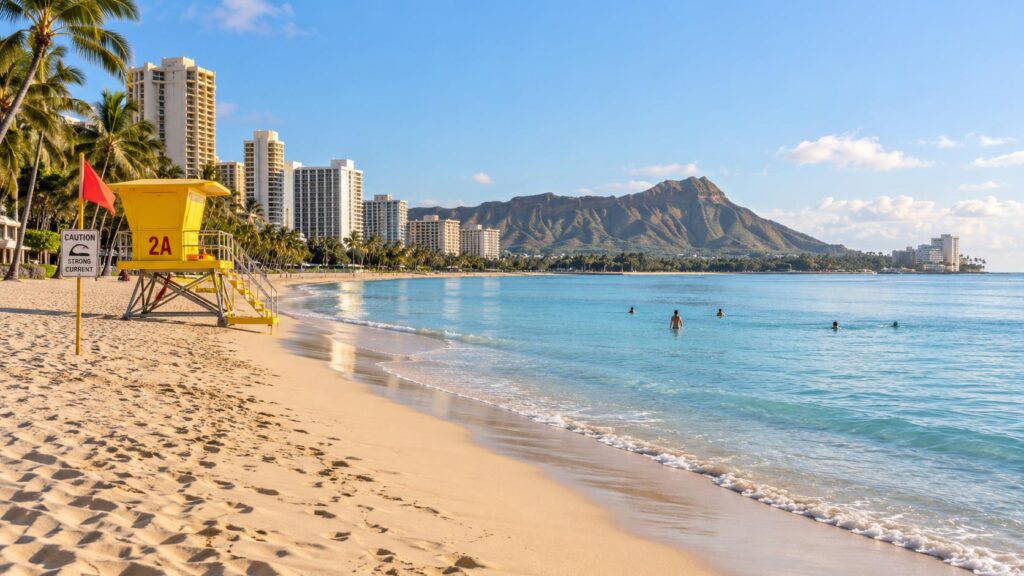
Yes. Waikiki is one of the calmest and most protected swimming beaches in Hawaii, and the main stretch is watched by lifeguards. The hazards worth knowing are box jellyfish on a monthly cycle, rip currents, reef cuts, and sunburn. Swim in front of a lifeguard tower and you have handled most of the risk.
That is the honest short answer. The longer answer is that safe does not mean risk free, and the specific risks in Waikiki are different from the ones people expect.
How Close Is Waikiki Beach to the Hostel?
Waikiki Beachside Hostel is one block from Waikiki Beach, which works out to roughly a two minute walk from the front door at 2556 Lemon Road B101. You can be in the water faster than most people can find parking.
That distance matters more for safety than it sounds. When the beach is two minutes away, you can walk down, look at the water, and walk back if the conditions or the warning signs say no. You are not committed to a beach day just because you drove across the island to get there. You can also go back for sunscreen, leave your valuables in a locker instead of buried in the sand, and swim in the calmer morning hours without having to organize a whole outing around it. There is more on the walk itself in our guide to walking to Waikiki Beach from the hostel.
The Six Rules Hawaii Ocean Safety Wants Every Swimmer to Follow
The state of Hawaii publishes a short list of ocean safety principles, and it is worth reading once before your first swim because every one of them exists for a reason.
- Know your health limits and your fitness level
- Always swim at a lifeguarded beach
- Learn proper swimming and snorkeling technique
- Always swim with a buddy
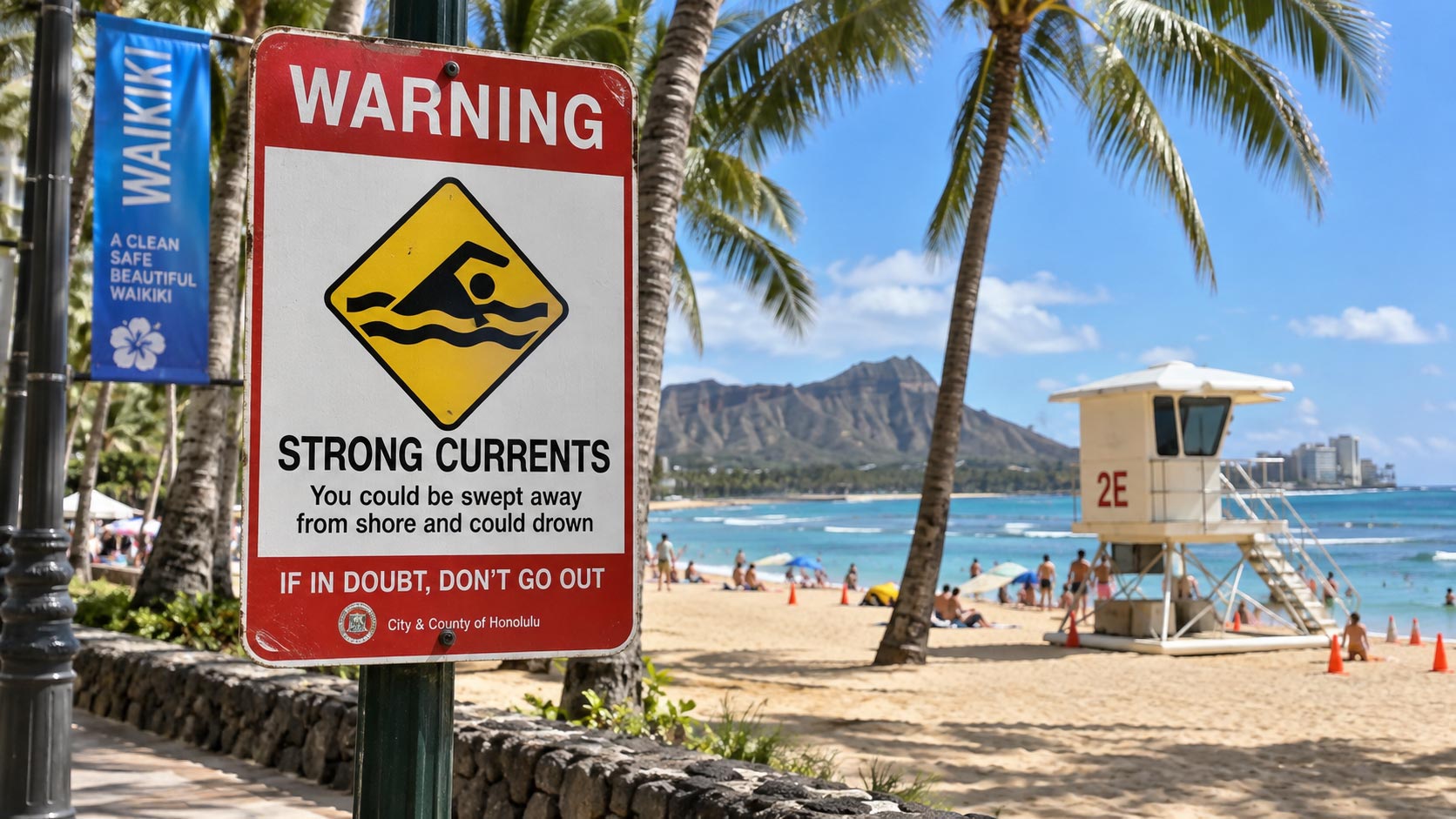
- Obey the warning signs
- Stay aware of ocean conditions
None of that is complicated and none of it is new. What catches visitors out is the assumption that a famous beach in front of hotels is basically a swimming pool. It is not. It is open ocean with good conditions most of the time.
Swim Where the Lifeguards Are
If you only take one thing from this post, take this one. The National Weather Service puts the odds of drowning at a beach with lifeguards at roughly one in eighteen million. That is not a small improvement over swimming alone at an unguarded stretch. It is the single biggest safety decision you will make all week, and it costs you nothing but walking a little further down the sand.
Find a tower, swim in front of it, and stay inside the flagged area. Lifeguards also post the current conditions and hazards on the tower each day, so it takes five seconds to learn whether today is a normal day or a day to stay shallow.
Box Jellyfish and the One Calendar Worth Checking
This is the Waikiki specific hazard that catches almost every first time visitor by surprise. Box jellyfish arrive at south shore Oahu beaches on a recurring monthly cycle timed to the full moon, show up in numbers for a few days, and then clear out. During an influx, warning signs go up at affected beaches and lifeguards will tell you straight whether to stay out.
The useful thing is that this is predictable enough to plan around. The Waikiki Aquarium publishes a Box Jellyfish Calendar of estimated influx dates, and it is worth a look when you are planning which days to swim. The Aquarium is careful to note that the dates are estimates only and that jellyfish can be present on any day of the year, so treat the calendar as a heads up rather than a guarantee.
If you do get stung, get out of the water and find a lifeguard. Do not rely on whatever remedy you read on a forum. The lifeguards on this beach deal with stings constantly, they know the current treatment, and they are right there.
Rip Currents Form on the Nicest Days
A rip current is a narrow channel of water flowing away from shore, and it is the hazard that most often turns a routine swim into an emergency. The counterintuitive part, and the National Weather Service says this explicitly, is that rip currents often form on calm sunny days. People let their guard down precisely when the water looks most inviting.
If you are caught in one, the water is moving away from the beach, not under it. Do not try to swim straight back against the pull, because you will lose. Swim parallel to the shore until you are out of the channel, then angle back in. If you cannot break free, float, wave, and shout for help rather than exhausting yourself.
There is one more piece of advice you will hear all over Hawaii and it is worth repeating. Never turn your back on the ocean. Waves here do not politely take turns.
Shore Break, Surf Season, and Why Waikiki Is the Gentle Option
Oahu has beaches that break hard and shallow directly onto sand, and those shore breaks injure people every year. Waikiki is generally not one of them, which is exactly why surf schools teach beginners here and why it is a reasonable place to learn.
What does change is the season. Surf conditions shift through the year, and a stretch that is glassy in July can be a different animal during a winter swell. Look at the water each time rather than assuming today is like yesterday, and check the tower.
If you want to actually learn to ride something, the beach in front of Waikiki is one of the best beginner setups anywhere, and we have written separately about affordable surf lessons near the hostel.
Reef Cuts and What Is Under Your Feet
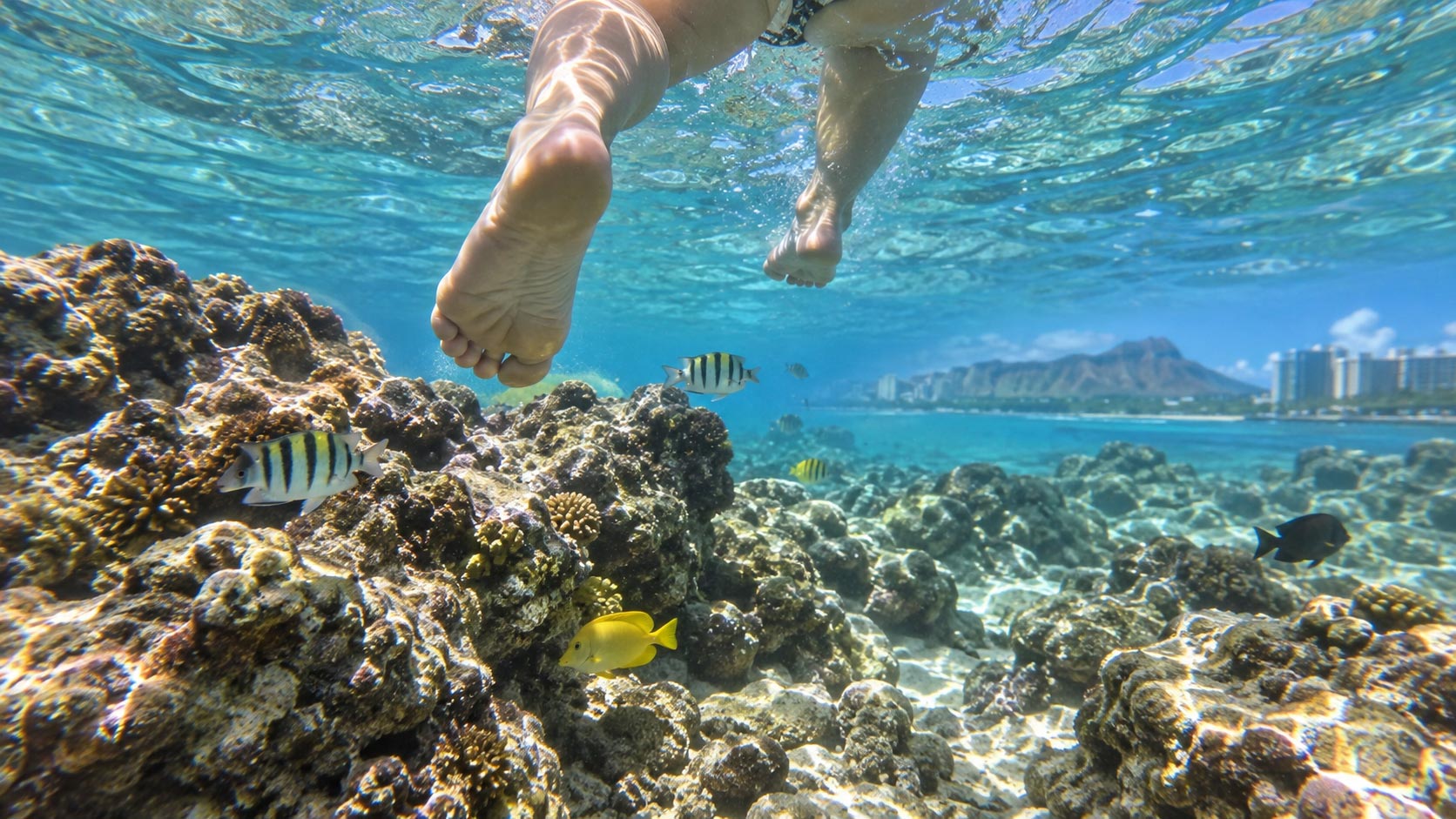
The reef that makes Waikiki calm is also the thing most likely to send you looking for a first aid kit. Coral and rock sit close to the surface in places, and a scrape from either tends to be shallow but slow to heal and prone to infection in warm salt water.
Two habits prevent nearly all of it. Do not stand on the reef, both because it cuts you and because you damage living coral that took decades to grow. And shuffle your feet in shallow sandy areas rather than stomping, which gives anything resting on the bottom a chance to move first. If you do get a cut, rinse it with fresh water and clean it properly rather than letting it go.
The Sun Is the Hazard Nobody Plans For
More visitors have their trip ruined by sunburn than by anything in the water. Hawaii sits close to the equator, the trade winds keep you feeling cool while you cook, and the water reflects light straight back up at you. People who never burn at home burn badly here.
Reapply more often than you think you need to, especially after swimming, and remember that the hours around midday are the harshest. Being one block from the beach helps here too, because you can swim in the morning, walk back for the middle of the day, and come out again in the late afternoon when the light is better anyway.
What the Hostel Has and What to Bring
A few things make a beach day simpler when you are staying this close. The hostel rents beach gear, so you do not need to buy anything you will abandon at the airport. Lockers are available for your valuables, which is a better plan than leaving a phone and a wallet in a bag on the sand while you swim. The tour desk can point you toward the right conditions for what you want to do, and the free pancake breakfast from 8:00 AM to 10:00 AM means you can eat and be in the water early, when Waikiki is calmest and least crowded.
Bring or pick up sunscreen, water, and a rash guard if you burn easily. Everything else is available a short walk away. If you are also wondering about personal safety on land rather than in the water, that is covered in our separate post on whether Waikiki is safe.
Quick Answers About Swimming at Waikiki Beach
Is Waikiki Beach good for beginners and weak swimmers? Yes. It is one of the calmer, more protected beaches on Oahu and the main stretch is lifeguarded, which is why surf schools teach beginners here. Stay in front of a tower and in water you can stand in.
Are there sharks at Waikiki Beach? Shark encounters at Waikiki are extremely rare. Rip currents, reef cuts, and sunburn are vastly more likely to affect your trip.
When are box jellyfish at Waikiki? They arrive on a recurring monthly cycle tied to the full moon and stay a few days. Check the Waikiki Aquarium Box Jellyfish Calendar for estimated dates and look for posted warning signs at the beach.
What do I do if I get caught in a rip current? Do not swim straight back toward shore. Swim parallel to the beach until you are out of the current, then angle back in. If you cannot break free, float and signal for help.
Is Waikiki Beach lifeguarded? The main stretch has lifeguard towers, and the guards post daily conditions and hazard information. Swim in front of a tower.
How far is Waikiki Beach from Waikiki Beachside Hostel? One block, about a two minute walk from 2556 Lemon Road B101.
Two Minutes to the Water, One Minute of Common Sense
Waikiki earns its reputation as an easy place to swim. The reef takes the punch out of the swell, lifeguards watch the sand, and the water in front of the beach is about as welcoming as the Pacific gets. All of that stays true as long as you swim in front of a tower, read the signs, check the jellyfish calendar before you plan a big beach day, respect the reef, and keep reapplying sunscreen. Staying one block away at Waikiki Beachside Hostel makes every one of those easier, because you can look at the water before you commit, stash your valuables in a locker, and come back out when conditions are right. Book your stay, walk the one block, and get in.